









10Life Financial Limited
Enquiries: enquiries@10life.com
Hotline: (852) 3705 1599
Address: 16/F Greatmany Centre, 109-115 Queen’s Road East, Wan Chai, Hong Kong



How to choose travel insurance for Taiwan?
General Taiwan travel insurance may not necessarily cover a self-drive tour around the island.
Common travel activities in Taiwan and the scope of travel insurance cover
Water activities: surfing, snorkelling, scuba diving
Land activities: general mountain climbing, off-road climbing, ATV off-road vehicle
High-altitude activities: Bungee Jump, paragliding, skydiving
Does Taiwan travel insurance cover natural disasters such as earthquakes and typhoons?


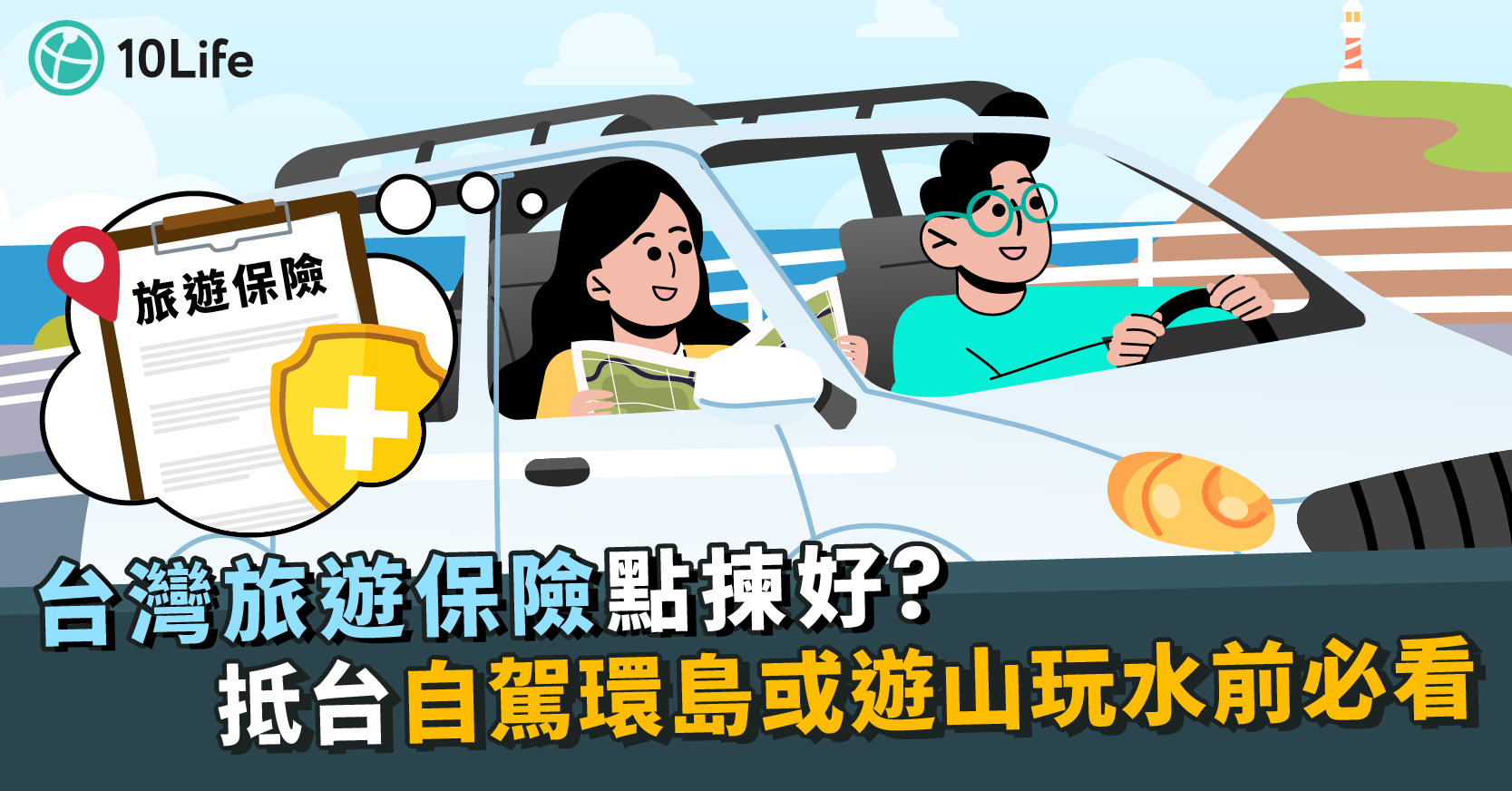
Taiwan round-island self-drive trips, surfing along the Hualien-Taitung coast, and diving in Kenting may all sound relaxing, but they actually carry hidden risks. Many Hong Kong people assume that “having travel insurance is enough”, only to discover the truth after a road accident, sudden weather changes or a flight cancellation that their policy may not cover third-party liability for rental cars, high-risk water activities, or even trip cancellations caused by a typhoon. Taiwan lies in an earthquake zone and on the path of typhoons, so Hong Kong travellers who enjoy self-driving round the island, water sports, mountain activities or flying should first make sure they understand the coverage and blind spots of travel insurance before departing. Below, we will begin with the five core areas of cover, then break down the practical details of round-island self-driving, popular activities and natural disaster cover, to help travellers prepare thoroughly before booking flights, hiring a car or joining a tour, so they can enjoy their trip with peace of mind and have insurance protection to rely on if anything goes wrong.
How to choose travel insurance for Taiwan?
For a Taiwan itinerary, choosing a single-trip or annual travel insurance plan, the first step is to identify the five core areas of cover in the policy: medical expenses, personal accident, baggage cover, trip cover and emergency assistance.
Medical expenses cover is the foundation of the entire policy. Although medical charges in Taiwan are generally lower than in Hong Kong, costs can still be substantial if hospitalisation, surgery or emergency transport is required, particularly when transfer from remote areas to hospitals in major cities is involved. Most travel insurance plans divide medical cover into two parts: “accidental injury” and “overseas sudden illness”. The former covers injuries caused by external, unexpected incidents during the trip, while the latter protects against situations where an illness suddenly develops during the journey without any prior treatment before departure. It usually requires immediate medical treatment locally, and any follow-up consultation after returning to Hong Kong is subject to a specified number of days and a maximum limit.
Baggage cover mainly covers damage to or loss of checked baggage, theft of or damage to personal belongings, and the cost of purchasing essentials when baggage is delayed. When an airline loses or damages baggage, passengers must obtain written confirmation from the airline immediately, as any delay in reporting may affect compensation. Compensation for personal belongings generally has a “per item or per set” limit, while valuable items such as mobile phones, cameras and laptops usually have separate, lower limits. Relying on travel insurance alone may not be enough to fully compensate for the loss; for example, if the latest model of mobile phone is damaged, the actual payout is likely to be lower than the market price.
Trip cover relates to whether you can reach your destination. If, before departure, you need to cancel the trip because you or an immediate family member suddenly falls seriously ill, has an accident, passes away, or there is a major incident at home, the insurance will compensate for non-refundable flight tickets, hotel bookings and prepaid travel package costs, provided the event is usually unforeseen rather than already known, and occurs within the number of days specified in the policy. If, during the trip, you need to incur additional accommodation or rebooking costs because of flight delays, cancellations or rerouting, compensation will be based on the “number of hours delayed” or “reasonable additional expenses”. Some plans even offer advanced cover such as “cancel for any reason”, allowing travellers to recover part of their costs even when cancelling for non-traditional insured reasons.
Emergency assistance is often overlooked, yet it is one of the most important elements when something actually goes wrong. Most travel insurance policies come with 24-hour global emergency assistance services, including emergency medical evacuation, repatriation of remains, arranging visits from relatives and friends, assistance with advance payment or guarantee of hospital deposits, interpretation and legal referrals, among others. If you suffer serious injuries in a remote area of Taiwan and need to be transferred to a hospital in a major city by ambulance or even helicopter, the cost can be frighteningly high. Without this cover, it is easy to end up in the awkward situation where “the person is rescued, but the bill cannot be paid”.
General Taiwan travel insurance may not necessarily cover a self-drive tour around the island.
Self-drive travel around Taiwan is highly attractive to Hong Kong people. Whether driving along the Suhua Highway Improvement Project, Provincial Highway 9, or Yunlin Taixi, or riding a motorbike around the island, you can explore at your own pace. However, from an insurance perspective, self-drive travel involves risks that are completely different from those of an organised tour or a journey by public transport. Relying on a standard travel insurance policy often only covers injuries or death to yourself, but not losses caused to others if you hit someone else.
In most travel insurance policies, in a self-drive scenario, only medical expenses and personal accident compensation for the driver’s own injuries arising from an accident are covered. In other words, if you injure yourself in a single-vehicle accident while driving or riding a motorbike, you may claim medical expenses and any disability compensation in accordance with the policy terms. However, once a third party is involved — for example, if you hit a pedestrian, damage another person’s vehicle, or even affect a shop or roadside installation — the “personal liability” section in travel insurance will usually expressly exclude losses caused while driving any motor vehicle. Third-party losses then have to be covered by rental car insurance or paid out of pocket.
Most car rental companies in Taiwan include basic third-party liability insurance and vehicle damage insurance. Sometimes these are packaged under names such as “basic comprehensive cover” or “collision damage waiver (CDW)”, but there is usually a fairly substantial excess. This means the renter must pay an amount first each time there is an incident, and only the balance will be paid by the insurer. The excess may range from several thousand to tens of thousands of New Taiwan dollars. The more expensive the car, the more alarming the excess often is. Many people only discover when returning the car that their credit card has been charged a substantial repair difference.
To help travellers fill this protection gap, more and more travel insurance policies now include “rental car excess cover”. These policies are often marketed as “self-drive travel insurance”. If a covered accident results in the rental company charging you an excess, you may claim from the insurer, with compensation usually ranging from several thousand to over ten thousand Hong Kong dollars. However, this cover only reimburses the excess you have actually paid. It does not cover third-party losses or claims exceeding the rental company’s insurance limit. Therefore, in the event of a serious collision, where the other party is injured or their vehicle is completely destroyed, the key issue remains whether the third-party liability limit provided by the rental company is sufficient.
Before driving around the island, it is advisable to spend some time understanding two things: first, the provisions in the travel insurance policy regarding self-drive travel, alcohol, driving licences and third-party liability; second, the types of insurance provided by the rental company, the limit of third-party compensation and the amount of the excess. If you plan to ride a motorbike around the island, you should also check whether the policy has any special restrictions on riding motorcycles or small scooters. Some policies also have detailed requirements regarding engine capacity and whether a helmet is worn.
Common travel activities in Taiwan and the scope of travel insurance cover
Taiwan’s natural environment is diverse, ranging from eastern coastal bays to the Central Mountain Range, and on to alpine grasslands and offshore island waters. For Hong Kong travellers, it is a paradise for water sports, hiking and aerial activities. However, different activities are classified differently under insurance policy terms. Some are treated as “general leisure activities” and are automatically covered, while others are classed as “high-risk sports” and require additional cover, or may not be covered at all. Before departure, it is essential to verify each activity one by one according to its category.
Water activities: surfing, snorkelling, scuba diving
Taiwan is surrounded by sea on all sides, and places such as Kenting, the North Coast, Hualien, Green Island and Xiaoliuqiu are all popular hotspots for water activities among Hongkongers. Snorkelling is generally regarded as a lower-risk water activity. Participants wear life jackets, masks and snorkels, and observe coral and fish in shallower waters. Most travel insurance policies treat it as an ordinary leisure activity; provided the activity is neither professional nor competitive in nature, and safety guidelines are followed, it is generally covered.
Surfing carries more risk than relaxed snorkelling, involving uncertainties such as wave height, sea currents and rip currents. Nevertheless, many insurers still classify “recreational surfing” as an insurable activity, so long as it is carried out under the guidance of a qualified instructor and with appropriate safety equipment; if injury occurs, claims may be made under the standard accidental medical expenses terms. Taking part in competitions or long-term training may be regarded as professional sport and is usually outside the scope of standard travel insurance.
As for scuba diving, the risk and insurance issues are greater. Although many travel insurance policies state that they cover “recreational diving”, they often impose restrictions, such as a maximum diving depth of 30 or 40 metres, a requirement to hold an internationally recognised diving certificate, the need to be accompanied by a dive guide or dive shop, and exclusion of special types such as cave diving, ice diving or technical diving. Some plans simply classify any diving that uses breathing apparatus as a high-risk activity, and require an additional premium or a switch to dive insurance before cover applies. Hongkongers planning to dive in Green Island or Xiaoliuqiu should, before purchasing cover, check the travel insurance policy terms carefully: whether boat diving or shore diving led by a licensed instructor is covered, what the depth limit is, whether a diving certificate must be shown, and whether there is any restriction on the number of diving days.
Although free diving does not use an oxygen tank, because it involves breath-hold descents and higher technical requirements, many policies directly classify it as a high-risk activity in the same way as scuba diving. Unless the policy expressly states that it is covered, one should not assume that it is safe simply because there is “no tank”. Regardless of the type of water activity, if an injury occurs, medical attention should be sought immediately, and medical receipts, activity registration records and instructor certification should be retained to facilitate future claims.
Land activities: general mountain climbing, off-road climbing, ATV off-road vehicle
Taiwan boasts magnificent mountain scenery, from suburban hiking trails to the country’s hundred famed peaks. For hiking enthusiasts, hiking itself is already one of the highlights of a trip to Taiwan. For ordinary leisure hikes, such as Elephant Mountain, Yangmingshan, and popular Alishan trails, most travel insurance policies regard these as normal outdoor activities and, in general, they are covered. The real point to note is high-altitude and technical mountaineering.
Many policies set an “altitude limit”, for example, covering mountaineering activities only up to 5,000 metres above sea level; anything above that is treated as high-risk climbing and requires special insurance arrangements. Although Taiwan’s Hehuanshan, Xueshan and Yushan are not low in altitude, they still fall within this limit and are generally covered by standard travel insurance. However, if rope climbing or professional rock-climbing routes are involved, they may be classified as high-risk activities. For summit itineraries that require a mountain entry permit, park entry permit, or a guide, it is best to check in advance whether the travel insurance imposes any restrictions on that level of mountaineering, so as to avoid misunderstandings.
ATV off-road driving has become increasingly popular in recent years in places such as Dong'ao in Yilan and Kenting. Tourists drive small four-wheel off-road vehicles across beaches or forest tracks, which is great fun, but because it involves motor vehicles and uneven terrain, the risk is naturally higher. Some travel insurance policies explicitly state that they will cover non-competitive ATV experiences arranged by licensed operators, with proper safety equipment in place; however, speeding, disobeying the instructor’s instructions, or driving around unsupervised in unauthorised areas may mean that any incident will not be compensated. If the activity has already included accident insurance arranged by the organiser, travellers may need to claim first from that policy, with travel insurance then providing supplementary cover or covering any shortfall. For details, please check with the relevant insurer.
Another key point for mountaineering and off-road activities is “emergency rescue”. If you are injured in the mountains and require helicopter evacuation or specialist mountain rescue, the cost can be extremely high. Some local mountaineering insurance policies specifically cover “search and rescue expenses”, but standard Hong Kong travel insurance may not fully include this. When choosing a plan, it is worth paying particular attention to the compensation limit for overseas emergency transport and the situations covered, and considering additional cover from a local Taiwan mountaineering insurance policy or from the activity organiser.
High-altitude activities: Bungee Jump, paragliding, skydiving
Gliding over the landscape by paragliding in Cingjing, Luye Gaotai or along the Hualien coast, leaping off a platform for a bungee jump, or even skydiving at a dedicated venue are all on many travellers’ “bucket lists”, but they are also viewed by insurers as high-risk activities. Many travel insurance policies list high-altitude activities separately, covering them only under specific conditions; some exclude them altogether, requiring an additional hazardous sports add-on plan for cover.
Bungee jumping is usually carried out at government-approved venues, with a professional operator responsible for installing safety equipment and overseeing the activity. Some policies expressly cover “bungee jumping provided by licensed operators”, on the condition that the activity is recreational and not a professional performance. If travellers jump independently at an unauthorised facility, or take part in extreme activities with a competitive element, insurers will generally not accept any related claim, even if the injury is severe.
Paragliding is usually conducted in a tandem format, with the instructor and traveller taking off and landing together. When deciding whether to provide cover, travel insurers will normally consider whether the activity is operated by a qualified instructor, whether the site is approved by the authorities, and whether the altitude is within a reasonable range. If these conditions are met, many travel insurance policies will regard it as one of the insurable hazardous activities. Conversely, stunt paragliding or racing is almost certainly excluded.
Skydiving carries an even higher risk, and insurers’ stances vary considerably. Some will only cover “tandem skydiving”, which must be carried out by a professional instructor carrying the traveller, while others require the altitude not to exceed the policy’s stated limit and that no stunt manoeuvres are involved. If you plan to travel to Taiwan specifically for a skydiving experience, it is best to compare the high-altitude activity terms of different travel insurance products when booking your flight, and if necessary consider purchasing additional insurance specifically for extreme sports.
Whichever high-altitude activity you take part in, you should confirm three things in advance: whether the operator holds the appropriate licence and adequate insurance, whether your travel insurance explicitly covers the activity, and whether your physical condition is suitable for high-altitude and intense activities. If the operator asks you to sign a “voluntary waiver” or “disclaimer”, you should read it carefully and understand that even if the activity itself is covered by local insurance, the scope for making a future claim may still be limited.
Does Taiwan travel insurance cover natural disasters such as earthquakes and typhoons?
When it comes to travelling in Taiwan, earthquake and typhoon risks cannot be overlooked. Taiwan sits at the boundary between the Eurasian Plate and the Philippine Sea Plate, and felt earthquakes occur from time to time throughout the year. The typhoon season also runs through the transition from summer to autumn, with news of flight cancellations, railway suspensions and attraction closures appearing all too often. For Hongkongers, a good travel insurance policy is not only there to cover medical expenses for falls and sprains; it should also provide support for your itinerary and safety when natural disasters strike.
Most travel insurance policies will treat earthquakes, typhoons and other natural disasters as one of the covered accident causes. If, during the trip, you are injured by a natural disaster or fall ill with a disease directly related to the incident, such as being injured by collapsing buildings or during an evacuation, medical expenses and emergency transportation may be claimed in accordance with the policy terms. Some plans also clearly state that “death or permanent disablement caused by natural disasters such as earthquakes, volcanic eruptions and typhoons” is eligible for accidental death/disability compensation. However, the basis for compensation depends on the policy’s definitions of “accident” and “natural disaster”; not every policy is treated the same.
In terms of the itinerary, if you have successfully purchased insurance before a natural disaster or travel warning is issued, and the trip is later forced to be cancelled because of that event, most travel insurance policies will compensate pre-paid and non-refundable costs such as air tickets, hotel bookings and activity reservations, provided the incident meets the condition of a “sudden event within a specified number of days before departure”, such as a major earthquake, a severe typhoon, or a declaration of a major disaster by the authorities within seven to fourteen days before departure. If a natural disaster occurs during the trip, resulting in a substantial delay or the need to shorten the trip and return to Hong Kong early, the policy’s “trip interruption” or “trip curtailment” cover will apply, compensating unused but non-refundable travel expenses and reasonable additional costs.
However, the key to natural disaster cover lies in whether the event was “already known”. Many travel policy terms explicitly state that insurance only covers “sudden events that were not already known to the public at the time of purchase”. If you only buy travel insurance after the Hong Kong Observatory or Taiwan’s meteorological authority has issued a typhoon warning, compensation may not be available for cancellations or delays related to that typhoon. The same applies to earthquakes: if you take out insurance only after a major earthquake has occurred, insurers will usually regard it as an existing risk and will no longer accept claims directly related to that disaster.
Another common misconception is that if a traveller cancels simply because they are “afraid”, even if no travel warning has been issued for the destination and no actual disaster has occurred, the insurer will generally not pay. If the projected path of a typhoon is still uncertain, flights and hotels are still operating normally, and the traveller chooses to cancel solely due to safety concerns, basic travel insurance cannot make a claim unless there is additional “Cancel for Any Reason” cover. Only a small number of premium plans offer this type of protection, allowing the insured to recover part of the costs when cancelling within a specified timeframe for subjective reasons, but the premium and conditions are naturally higher.
For flight delays or cancellations caused by typhoons and severe weather, travel insurance generally uses the number of hours delayed as the compensation threshold. For example, a fixed cash amount may be paid after the first six hours, with additional payments for each further delay period, or reimbursement for extra accommodation and meal expenses incurred due to being stranded. If a flight or ferry service is completely cancelled because of a natural disaster, the traveller must obtain formal proof from the airline or transport operator and retain all receipts for additional expenses in order to make a successful claim.
When travelling to Taiwan during the earthquake and typhoon season, the most prudent approach is as follows: first, buy insurance as early as possible, ideally soon after booking your flights and hotel, to avoid it later being regarded as a “known risk”; secondly, read the policy wording carefully and confirm how medical, itinerary and property claims are handled in the context of natural disasters, including whether earthquakes and typhoons are explicitly listed as covered causes, the triggering conditions for trip cancellation and trip interruption, and the compensation thresholds and limits for flight delays; thirdly, before departure and during the trip, keep a close eye on the latest updates from Taiwan’s Central Weather Administration, the Hong Kong Observatory and the Security Bureau’s outbound travel alerts. If a weather system may affect your itinerary, contact the airline, hotel and insurer as early as possible to understand your options, and keep all communication records, notices and receipts properly stored so that you have evidence to support any future claim.
This English version of this article has been generated by machine translation powered by AI. It is provided solely for reference purposes. In the event of any discrepancy or inconsistency between this translation and the original Chinese version, the Chinese version shall prevail.
I’m delighted to be part of 10Life in building a one stop insurance platform.
10Life Product Comparison and 10Life Insurance Ratings are developed by 10Life Financial Limited, an authorised insurance broker company licensed with the Insurance Authority under License Number FB1526. 10Life Product Comparison and 10Life Insurance Ratings are developed for generic customer segments using mathematical calculations based on product information, facts and data, and are not influenced by any partnerships with or fees received from insurance companies. Any information on 10Life Platform ("10Life Information"), including but not limited to Product Comparison, Product Ratings, Blog Articles are intended for general education purpose and reference only. None of the 10Life Information is intended, nor should they be considered or relied upon, as regulated advice, insurance, financial, investment or professional advice, recommendation, approval, endorsement, invitation or solicitation in respect of any insurance, financial or investment products. 10Life Information does not take into account your individual needs. Reading 10Life Information should not be considered as conducting a suitability assessment, and is not sufficient to form the basis of any decisions to purchase any insurance products. You should rely on information authorised by insurance companies, carry out your own research and/or seek independent advice from licensed intermediaries before purchasing any insurance products or making any insurance decisions. While reasonable effort is used when collecting, validating and updating 10Life Information from various channels, none of 10Life Group and its subsidiaries, affiliates, agents, directors, officers and employees will be responsible for any liability, claim or loss arising from or associated with you using 10Life Information. No warranty, representation or guarantee is given by 10Life Group and its subsidiaries on the accuracy, completeness and timeliness of the information. If you have any questions on 10Life Product Comparison and 10Life Insurance Ratings, please email us at enquiries@10life.com




 Talk to 10Life on WeChat
